

Over my career, the conversation around high‑frequency words has shifted dramatically. A decade ago, it felt like everything was moving away from teaching, practising, and assessing these words. “Sight words” became a term teachers avoided, because it was often associated with rote memorisation - the idea that students should learn the whole word visually, rather than through any phonics‑based approach.
In recent years, high‑frequency words have found their way back into most literacy programs. However, the focus is no longer on memorising entire words, but on decoding what can be decoded and explicitly identifying and discussing the tricky parts. (I’m sure many of us were already doing this, but you know how it goes, sometimes the baby goes out with the bathwater.) Many structured literacy programs now introduce a couple of tricky high‑frequency words each week supporting students to analyse the regular letter‑sound relationships within the word and learn only the irregular element “by heart.”
My Classroom Approach:
For the last few years the only thing I did for high-frequency words was following my whole‑school phonics/spelling program outline where it listed a couple of words to examine with students each week and reviewing them in daily reviews.
But over the last year, I’ve brought back something I used from the very beginning of my teaching career: mastery folders.
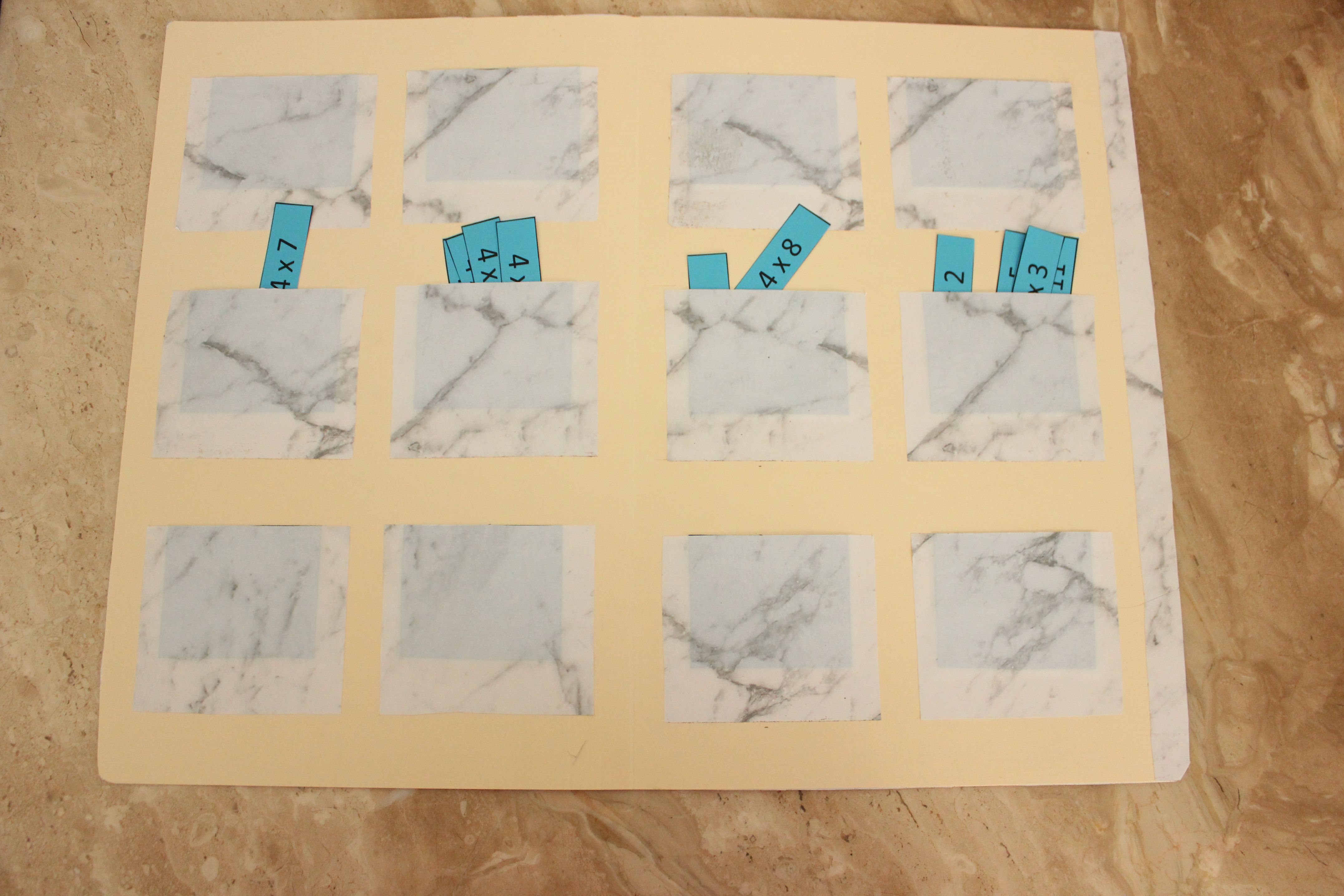
These folders are well‑worn now (they’ve survived almost 20 years!), but I couldn’t bear to throw them out. And honestly? They’ve been one of the most effective tools I’ve used for building automatic recall. I have even used them in maths to help with multiplication and division facts.
Here’s how they work.
Step 1: Assessing Automatic Recall
At the start of each term, I assess students on their automatic recall of 200 high‑frequency words (only the ones that didn't get checked off in the previous term for term 2 onwards). My 200‑word list is designed to be practical, not overwhelming. It’s sequenced so students practise only the words that are genuinely tricky - beginning with simple, decodable words and gradually moving toward those with irregular phonics patterns. As students’ knowledge of phonics grows, many high-frequency words stop being 'tricky', which is why this list doesn’t match the standard “top 200 words” and isn't excessively long.
Step 2: Selecting the Right Words for Each Student
I take the first 10 words each students got wrong/took a long time to decode and place them into their mastery folder. The words might be from a mixture of lists, I don't lock students into one list just because they got one word wrong. This means students practise only the words they personally need and make greater gains in their personal reading. When first introduced, we decode the word together and look at the tricky parts. We relate the word to others we know or to the spelling generalisation that shows us why the letters are doing what they are.
Step 3: Daily Mastery Practice
I assign “mastery folder helpers” — other students in the class who do the folders with their peers during the 10 minutes after lunch when we do silent reading/rest time.
A word is moved to the next pocket if they get it right, or kept in the same pocket if they get it wrong. When words are first introduced, they can be scaffolded — with prompts, reminders, or decoding support — so students experience success and the word can still move to the next pocket.
The flashcards I use have dots and lines under the sounds to support decoding, a scaffold that aligns beautifully with orthographic mapping principles.
At the start of each week, I test students myself. Any mastered words are removed and replaced with new ones from their assessment sheet.
Why This Works
It’s personalised. It’s evidence‑aligned. It’s efficient. Once it’s up and running, the whole process takes minimal time but delivers big impact.
Since bringing back mastery folders, my students are more confident readers who progress faster and finish the year at a higher level than cohorts I taught without them (as supported by DIBELS scores).
If this sounds like something your students need, I have the full Mastery Folder Pack available on my website. It includes individual checklists, whole class checklists, flashcards (with and without scaffolds) and assessment cards.